When you lose a friend: an evolution of the relationship between Serbia and Hungary
Introduction
For decades, Belgrade and Budapest have been tied by a friendly relationship, thanks to the common interests and ideological alignment of their political leaders, Viktor Orbán and Aleksandar Vučić. Nevertheless, the relations between Serbia and Hungary have not always been of partnership, and the recent triumph of Péter Magyar’s Tisza party during Hungary’s Parliamentary elections might influence the country’s position towards Serbia.
Many symbolic moments marked the Orbán-Vučić alliance, including joint meetings, public praises, and infrastructure projects that connect the two countries and strengthen their cooperation. Yet, the solid alignment of Hungary, an EU member state, with Serbia, a candidate country, often raised eyebrows in Brussels, perceived as at odds with EU norms and objectives.
Starting with a historical background, this article will delve into the motives that characterised the closeness between Serbia and Hungary so far, leaving an open question about a future with changed leadership.
Historical Background: From Tension to Cooperation
Despite the recent friendly character, the relationship between the two neighbouring countries was not always smooth. Rather, the dialogue between Budapest and Belgrade had been marked by layered historical tensions, especially regarding the region of Vojvodina, in today’s northern Serbia, and the Hungarian minority.
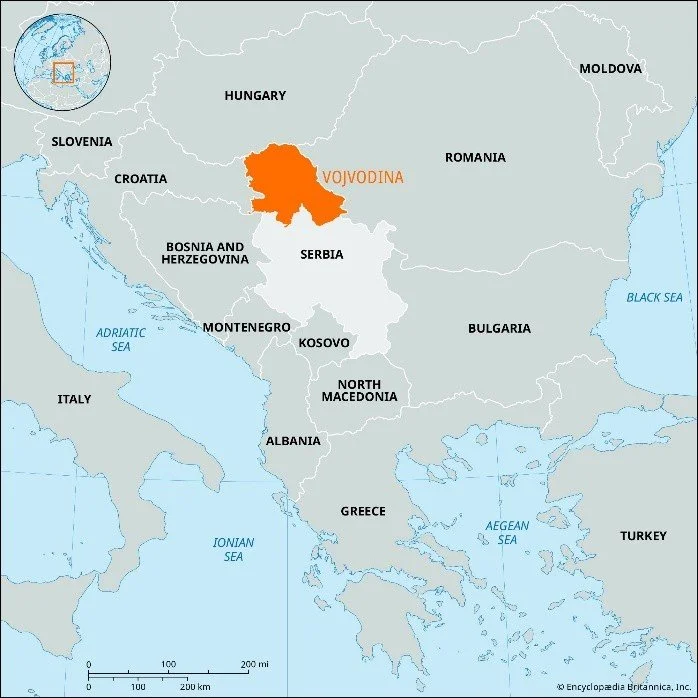
Province of Vojvodina, Serbia (Allcock, n.d.)
Large parts of Vojvodina were once part of the Austro-Hungarian Empire until the end of World War I, when borders shifted. Thus, these territories became part of the Kingdom of the Serbs, Croats, and Slovenes, which later became Yugoslavia. As a consequence of the border changes, a significant Hungarian minority was left living in Serbia, resulting in long-term sensitivity around territory, identity, and minority rights (Allcock, n.d.).
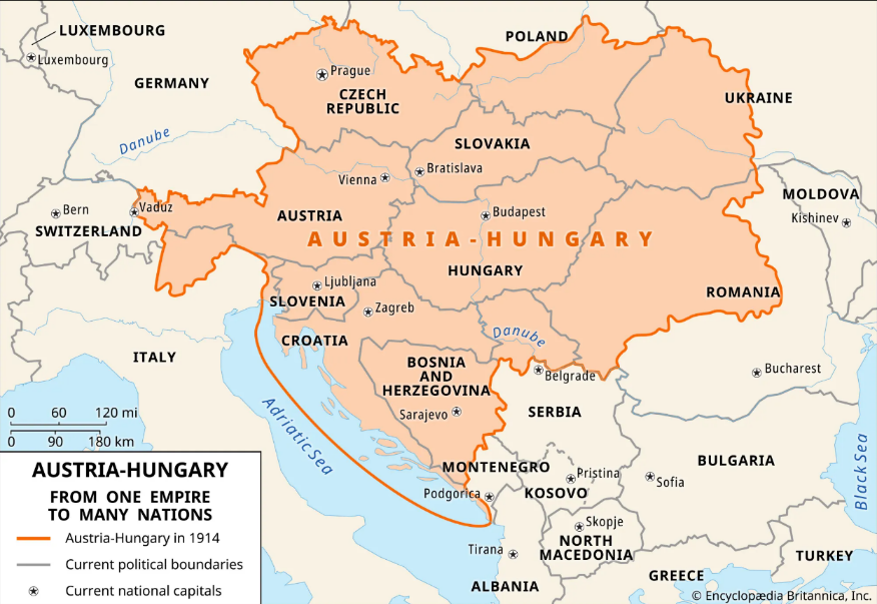
Map of Austria-Hungary in 1914 (Britannica Editors, 2019)
Vojvodina became a battlefield again during World War II, when the Hungarian forces, aligned with the Axis powers, occupied parts of the region. Once the War ended, the atrocities suffered by the Serb and Jewish civilian population during the occupation were followed by reprisals of the Yugoslav partisans against ethnic Hungarians (BIRN, 2018). The mutual grievances and unresolved historical trauma that resulted from the reciprocal violence lasted for decades.
Fast-forwarding in history, during the breakup of Yugoslavia, Hungary supported the Western and NATO positions, thereby further distancing itself from Serbia and its President Slobodan Milošević. After joining NATO in 1999, despite concerns about the safety of the Hungarian minority living in Serbia and many anti-bombing protests by civil society, Hungary ceded airspace to the North Atlantic forces intervening against Yugoslavia (RFE/RL, 1999).
Throughout history, the rights of the ethnic Hungarians living in Serbia have represented the main point of mistrust between the two countries. On the one hand, Hungary repeatedly expressed concerns about discrimination, security, and the political representation of Hungarians in Serbia. On the other hand, Serbia viewed such concerns as external interference in domestic politics. This confrontation fuelled friction and diplomatic tensions (Minority Rights Group, 2024).
With a change of leadership after the fall of Milošević, Belgrade-Budapest relations slowly improved and cooperation resumed, although trust still needed to be restored and historical issues remained politically sensitive, especially linked to the events related to World War II. In 2013, during a historic official visit to the Serbian Parliament, the Hungarian President Janos Ader issued an official apology for Hungary’s role in the persecution of Serbs during World War II (BBJ, 2013). In return, one year later, the Serbian National Assembly voided Yugoslav-era laws on the collective guilt of the Hungarian people for the events of WWII. These unprecedented developments allowed relations between the two countries to improve (Magyarország Kormánya, 2014).
Throughout history, Serbia-Hungary relations were shaped by shifting borders, wartime violence, and opposing geopolitical alignments, until reconciliation processes were initiated and like-minded political leaders took power in both countries.
Political Alignment: Orbán and Vučić
Although steps towards partnership had already been taken, the recent strategic closeness is not a continuation of the past, but a political construction.
Viktor Orbán’s and Aleksandar Vučić’s rule overlapped in Hungary and Serbia for more than two decades. Their personal and ideological affinity, with similar political interests and strategies, allowed the two countries to become closer than ever. Both leaders promoted a similar governing philosophy based on a strong, centralised leadership, emphasis on national sovereignty, and scepticism towards liberal democratic norms (Maliqi, 2026).
Although the 2015 migration crisis marked a tense moment in relations between the two bordering countries, especially after Hungary built a fence along its border with Serbia, the situation did not escalate into long-lasting bilateral tensions (BBC, 2015). Clearly, both leaders understood the relationship between their countries as highly instrumental. Viktor Orbán gained influence in the Western Balkans, positioned Hungary as Serbia’s key advocate inside the EU, and built a network of like-minded governments. Aleksandar Vučić managed to secure political backing from an EU member state, soften the EU’s criticism of Rule of Law issues, and keep Serbia’s EU accession process alive, at least on paper. In summary, while Orbán fostered regional influence, Vučić received EU cover, while creating together a front of scepticism toward liberal EU norms (Vicen, 2023).
Partnership in economic and energy investments represents another fundamental key factor for the good relations between the two neighbours. Through joint infrastructure projects such as the Belgrade-Budapest railway, trade and investment links, and energy cooperation, especially in gas transit, both leaders gained increased benefits. Hungary became a regional hub, while Serbia gained access to EU-linked markets and infrastructure (Government of the Republic of Serbia, 2026).
Adding to the political and economic interests, the genuine leader-to-leader rapport was clear and played an important role in strengthening close ties between the countries. Orbán and Vučić held frequent meetings and regularly expressed support, even using symbolic language addressing each other as brothers and friends (Čačić, 2021).
Minority Politics and Soft Power
Minority politics and soft power have also shaped the relationship between the two countries.
As explained, the Hungarian minority living in Serbia represented one of the main topics around which the relations between Hungary and Serbia developed throughout history. Today, with around 184 000 members, the Hungarian population is the largest ethnic minority living in Serbia. Concentrated in the northern province of Vojvodina, it acts as a bridge between the neighbouring countries (Minority Rights Group, 2024).
At the political level, the interests of the Hungarian minority are mainly represented by the Alliance of Vojvodina Hungarians (VMSZ), a centre-right, pro-EU party. Often a member of parliamentary coalitions in Belgrade and Vojvodina, VMSZ brings the minority’s stakes to the legislative and regional levels (Ivković, 2026).
The Hungarian government itself heavily finances the Hungarian population in Serbia, especially through funds directed to local media and initiatives aimed at economically supporting the community, such as the Prosperitati Foundation. The financial support allowed the growth of a solid network of Hungarian-language schools and cultural centres (Hungary Today, 2025).
The minority also plays a diplomatic role. Despite once representing a motive for tensions, today’s improved status of the Hungarian community has brought the neighbouring countries closer than ever, serving as a bridge for the alliance between Hungary and Serbia.
The EU Dimension: Bridge or Trojan Horse?
For the last decade, Hungary’s role within the European Union has been characterised by a confrontational attitude, blocking multiple legislative procedures and opposing the EU’s sanctions against Russia after the 2022 invasion of Ukraine. While conflicting with the EU’s direction, Hungary’s positions were aligned with Serbia, a country with closer ties to Russia.
Similarly, the EU expressed concerns over the Rule of Law in both countries. Orbán’s “illiberal democracy” model, characterised by regular elections but a fragile opposition, weak judiciary, and increased surveillance, seemed to have gained traction in Vučić’s Serbia, too (Amnesty International, 2018).
Meanwhile, while Orbán supported Serbia’s EU integration, the links and similarities between the two countries have raised eyebrows regarding the actual nature of their relationship vis-à-vis the EU. During Orbán’s leadership, some analysts expressed concerns over Hungary’s defence of Serbia and its leader, Vučić, worrying about a possible Serbian EU accession, viewed as a premature admission of a candidate not aligned with the EU’s democratic and foreign policy standards (Gonzalez Lucioni, 2025)
A new Leader: reaffirming or reshuffling?
Following the victory of his Tisza party at the latest legislative elections, since May 9, Peter Magyar is the new Prime Minister of Hungary. His success at the polls marked the end of Viktor Orban’s 16-year-long rule, characterised by an increased fragmentation of civil liberties and securitisation of the country. Magyar’s installation as Prime Minister led to a widespread sigh of relief throughout the European continent. The hope for a more pro-European, liberal government was shared by EU leaders, European civil society, and Hungarian citizens (Kirkegaard, 2026).
Inevitably, the regime change raised many questions regarding the changes expected by the new government, both about domestic and international affairs. Magyar’s convincing pro-European orientation led European leaders to expect from him a series of measures, including distancing from Belgrade and joining EU sanctions against Russia. Nevertheless, a shared border, the presence of a Hungarian minority in Serbia, and similar gas-related needs still tie the two countries.
In April, PM Magyar declared that Hungary’s support for Hungarians living in Serbia will not cease and that it will keep cooperating with the Alliance of Vojvodina Hungarians, despite the party’s previous allegiance to Viktor Orbán (Ivković, 2026). The words used when describing the relationship between the previous Hungarian government and the leadership of Aleksandar Vučić in Serbia also set the ground for a change in alliances. PM Magyar defined the ties between Orbán and Vučić as mediated by a “godfather”, implicitly referring to Russian President Vladimir Putin, and encouraged the Serbian students and citizens to draw strength from the Hungarian case and carry on with the nationwide strikes. Of course, such declarations were not appreciated by President Vučić (EWB, 2026).
Adding to the direct clashes between the two leaders, the new Hungarian government initially expressed the possibility of re-evaluating many shared infrastructure projects and economic agreements approved under former PM Orbán. So far, however, no step back has been taken, and joint projects continue to develop and to serve the needs of both countries (Miljković, 2026).
While it is still early to assess a considerable reshaping of the relationship between Hungary and Serbia, PM Magyar’s declarations are already distancing the two countries, at least on an ideological level.
Conclusion
The relationship between Hungary and Serbia was historically conflictual. However, 2013 marked a turning point, and the simultaneous leadership of Viktor Orbán and Aleksandar Vučić solidified the friendship between the two neighbours.
Through political, economic, and ideological drivers, with particular emphasis on the role of the Hungarian community living in Serbia, joint energy and infrastructure projects, and a like-minded ruling style, Orbán and Vučić forged a solid cooperation. While these ties allowed for a peaceful neighbourly relationship, they revealed problematic at the EU level, turning Hungary into a kind of Trojan horse, opposing EU values and policies from the inside while supporting Serbia’s EU accession.
The latest Hungarian elections have highlighted the limits of this strategic alliance. Hoped for by EU leaders, the victory of Peter Magyar and his Tisza party marked the potential closure of a 16-year-long chapter during which Orbán established himself as an iron-fisted leader and an EU destabiliser. Renewed parliamentary and presidential elections in Serbia are planned to take place on 25 October, 2026, including a new Students List in opposition to the ruling SNS, therefore opening another question regarding the future of relations between the two countries.
While it is still early to declare the start of a new era in the history of Hungary-Serbia relations, democratic elections and a leadership change highlighted how the dynamics between the two countries are in fact more volatile than previously thought.
References
Allcock, J. B. (n.d.). Vojvodina | autonomous province, Serbia. In Encyclopedia Britannica. Retrieved August 3, 2026, from https://www.britannica.com/place/Vojvodina
Amnesty International. (2018, May 31). What Is Going on in Illiberal Democracy Hungary? Amnesty International. https://www.amnesty.nl/actueel/what-is-going-on-in-illiberal-democracy-hungary
BBC. (2015, September 15). Migrant crisis: Hungary’s closed border leaves many stranded. BBC News. https://www.bbc.com/news/world-europe-34260071
BBJ. (2013, June 27). Hungary’s president apologizes to Serbia for WW2 crimes. Budapest Business Journal. https://bbj.hu/politics/foreign-affairs/intl-relations/hungary-s-president-apologizes-to-serbia-for-ww2-crimes/
BIRN. (2018, January 23). 76Th anniversary commemorations held for WWII novi sad massacre. Balkan Insight. https://balkaninsight.com/2018/01/23/76th-anniversary-commemorations-held-for-wwii-novi-sad-massacre-01-23-2018/in-pictures/
Britannica Editors. (2019). Austria-Hungary | history, map, & facts | britannica. In Encyclopædia Britannica. https://www.britannica.com/place/Austria-Hungary
EWB. (2026, April 14). First frictions between Magyar and vučić in post-election public statements - European western balkans. European Western Balkans. https://europeanwesternbalkans.com/2026/04/14/first-frictions-between-magyar-and-vucic-in-post-election-public-statements/
Gonzalez Lucioni, R. (2025, August 27). 🧭 How Hungary and Serbia expose the EU’s enlargement vulnerabilities. The Loop. https://theloop.ecpr.eu/why-hungary-and-serbia-should-make-us-rethink-eu-accession-critera/
Government of the Republic of Serbia. (2026). Mutual support, cooperation between Serbia, Hungary in various projects. Government of the Republic of Serbia. https://www.srbija.gov.rs/vest/en/109862/mutual-support-cooperation-between-serbia-hungary-in-various-projects.php
Hungary Today. (2025, December 9). Government invests €525 million to support Hungarian entrepreneurs in Serbia. Hungary Today. https://hungarytoday.hu/government-invests-e525-million-to-support-hungarian-entrepreneurs-in-serbia/
Ivković, A. (2026, April 21). What’s next for Hungarians in Serbia after Orbán’s defeat? - European Western Balkans. European Western Balkans. https://europeanwesternbalkans.com/2026/04/21/whats-next-for-hungarians-in-serbia-after-orbans-defeat/
Kirkegaard, J. F. (2026). What Orban’s ouster in Hungary means for Europe. In PIIE. https://www.piie.com/blogs/realtime-economics/2026/what-orbans-ouster-hungary-means-europe
Magyarország Kormánya. (2014). A Historical Review of the Most Painful Wounds in the Joint Past of Serbia and Hungary.
Maliqi, A. (2026, April 22). What Orbán’s defeat in Hungary means for the western Balkans. Atlantic Council. https://www.atlanticcouncil.org/dispatches/what-orbans-defeat-in-hungary-means-for-the-western-balkans/
Miljković, M. (2026, April 29). From “brother” Orbán to “partner” Maďar: Can Serbia’s relations with the new Hungarian leadership remain strong? NIN. Nin Online. https://www.nin.rs/english/news/111388/can-serbias-relations-with-the-new-hungarian-leadership-remain-at-a-high-level
Minority Rights Group. (2024). Hungarians in serbia. https://minorityrights.org/communities/hungarians/
RFE/RL. (1999, April 15). Watch list: April 15, 1999. RFE/RL. RadioFreeEurope/RadioLiberty. https://www.rferl.org/a/1347394.html
Vicen, M. (2023). Pragmatism, ideology and influence: Hungary-Serbia relations and western Balkans. Strategic Analysis. https://www.strategicanalysis.sk/pragmatism-ideology-and-influence-hungary-serbia-relations-and-western-balkans/
Čačić, D. (2021, September 9). Vucic and Orban formalise their “special relationship.” Euractiv. https://www.euractiv.com/news/vucic-and-orban-formalise-their-special-relationship/